Kodak Four Eras Ad Comparison
Brand / Product Ad Retro Film 2026-08-09
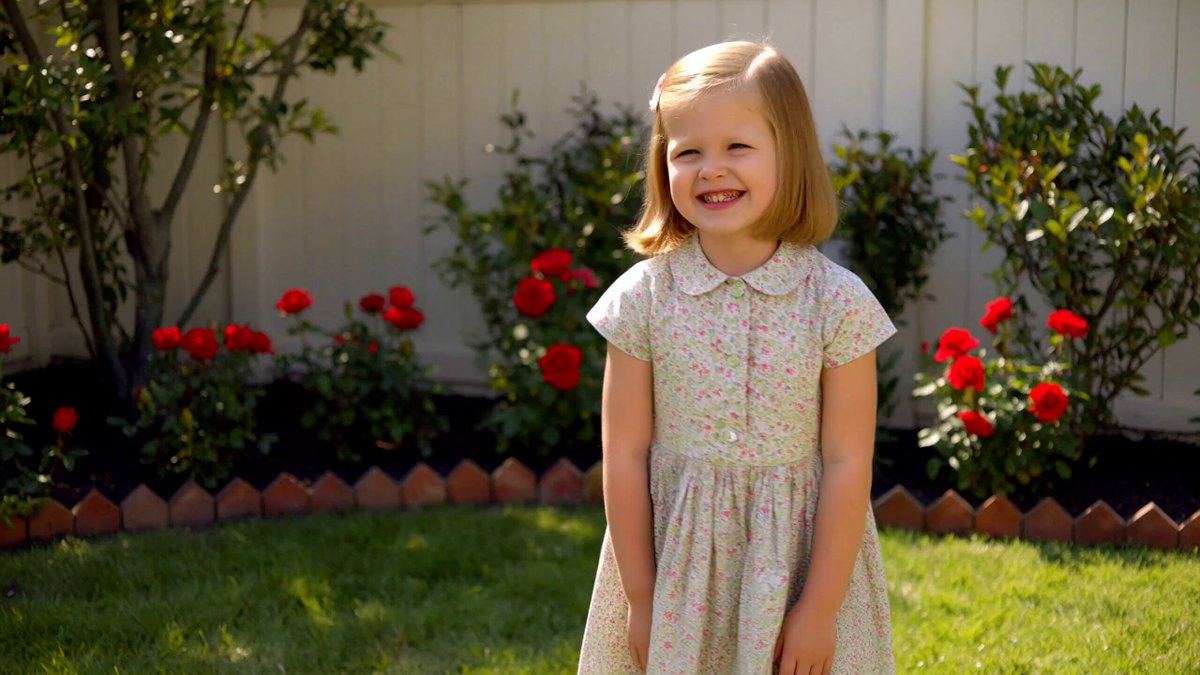
Footage © @Dheepanratnam · View original post
The clip was published publicly by its creator and is linked here directly; rights holders may request removal.
Full prompt
Seedance 2.0 vs Minimax H3 on Hailuo Ai

Four 15-second spot ads from different era.
Pure text-to-video, no reference images. 24 fps.

Second set in the series. Same method as Coca-Cola,
Kodak × Four Eras 1950,1970,1990,2010

Seedance 2.0 results and prompts in the replies⤵️ https://t.co/30FH9mAzuU

### 作者补充

[补充1]
Seedance 2.0 vs Minimax H3 on Hailuo Ai

Four 15-second spot ads from different era.
Pure text-to-video, no reference images. 24 fps.

Second set in the series. Same method as Coca-Cola,
Kodak × Four Eras 1950,1970,1990,2010

Seedance 2.0 results and prompts in the replies⤵️ https://t.co/30FH9mAzuU

[补充2]
Seedance 2.0 vs Minimax H3 on @Hailuo_AI
Same prompt. Two models. No reference images.

Coca-Cola ads from 1950, 1970, 1990 and 2010
each with its own film stock, logo, tagline and sound.

Sound on. You judge.

Seedance 2.0 results + Prompts in the thread👇 https://t.co/Hv7rFoKrNA

[补充3]
Seedance 2.0 rejected one prompt - i think overall - H3 did a better job

1950 — "You press the button, we do the rest"

[GOAL]
A 15-second Kodak television commercial as it would have been produced in 1950,
composed for a square 1:1 frame, 1440x1440, 24fps. Everything must belong to 1950 —
film stock, lighting, performances, typography, music and voice.

[MEDIUM]
Kodachrome. Deeply saturated, warm, high-key, with rich reds and greens and slightly
crushed blacks. Fine period grain, gentle highlight bloom, faint gate weave. This is a
film company advertising film — the image must look like the best possible example of
its own product.

[CAMERA]
Formal and locked on a tripod. One slow dolly in and nothing else. Centred, symmetrical
compositions.

[SETTING]
A suburban back garden on a bright summer afternoon in 1950. A trimmed lawn, a rose
border, a white-painted fence. A father in his thirties in shirtsleeves and high-waisted
trousers. His daughter, about six, in a cotton print dress and white socks.

[SEQUENCE]
0-3.5s   The girl stands on the lawn, fidgeting, trying to hold still and not managing
         it. Bright sun. She squints and grins.
3.5-7s   The father holds a Kodak Brownie box camera at waist height with both hands,
         looking DOWN into the waist-level viewfinder rather than holding it to his eye.
         He steadies himself. Both his hands are on the camera and he holds nothing
         else at any point.
7-10s    He presses the shutter release. A single mechanical clunk. The girl breaks her
         pose instantly and laughs. He winds the film on with his thumb, still holding
         the camera in both hands.
10-12.5s She runs out of frame toward him. He lowers the camera and watches her go.
12.5-15s Cut to an end card: a solid deep red field with the Kodak wordmark in yellow,
         and beneath it in yellow hand-lettered type, "You press the button — we do the
         rest." Completely still. Hold.

[TYPOGRAPHY]
The only text is the end card, hand-lettered in the manner of 1950 commercial art.
The Kodak wordmark is a bold sans-serif in yellow on red. Spell KODAK correctly.

[AUDIO]
Mono, narrow and slightly boxy, with constant faint optical-soundtrack hiss and limited
high end.

Music: a light orchestral bed, strings and woodwind, warm and domestic, ducking under
the voice.

Diegetic and forward in the mix: birdsong, a lawn underfoot, and at 7 seconds the
sound the whole commercial is built around — the heavy mechanical CLUNK of a leaf
shutter firing on a box camera, followed by the dry ratcheting click-click-click of the
film being wound on by thumb. Both must be clearly audible and mechanical.

Announcer — a warm, plummy, mid-Atlantic American male voice, mono, unhurried. Complete
script, 17 words, nothing may be added:
"She won't stand still for long. She doesn't have to. You press the button — we do the
rest."

[NEGATIVE]
No modern clothing, hairstyles, spectacles or objects. No 35mm SLR, no camera held to
the eye, no zoom lens, no flash unit, no light meter. No Kodak "K" symbol logo — that
is 1971 and did not exist in 1950. No LCD screens, no instant prints, no colour
Polaroids. No handheld camera, no zooms, no lens flare, no shallow depth of field, no
teal grade. No stereo, no synthesised instruments, no modern reverb. No captions,
subtitles, hashtags, social interface or watermarks. Do not cut more than four times.

1970 — The Carousel

The strongest of the four. A darkened room, a slide projector, and faces lit by their own memories.

[GOAL]
A 15-second Kodak television commercial as it would have been produced in 1970,
composed for a square 1:1 frame, 1440x1440, 24fps. Warm, quiet, domestic. Everything
must belong to 1970.

[MEDIUM]
16mm colour, visibly grainy, warm and slightly faded, with lifted blacks and pushed
reds. Shot in genuinely low light so the grain is heavy and the image sits close to
underexposed. Halation around the projector beam.

[CAMERA]
Handheld but calm, barely moving. One
Details
| Target model | MiniMax H3 |
|---|---|
| Use case | Brand / Product Ad |
| Style | Retro Film |
| Media | Video |
| Duration | 15.1s |
| Aspect ratio | 16:9 |
| Likes | 27 |
| Published | 2026-08-09 |
Attribution
Author: @Dheepanratnam · View original post
Prompts remain the copyright of their authors. We index and quote them with attribution plus a link to the original post; rights holders may request removal.
Run this prompt through the API
Copy the prompt above into a MiniMax H3 (Hailuo) text-to-video call to reproduce the shot. When adapting it, swap subject, setting and camera move one clause at a time. Access and licensing details are on About.