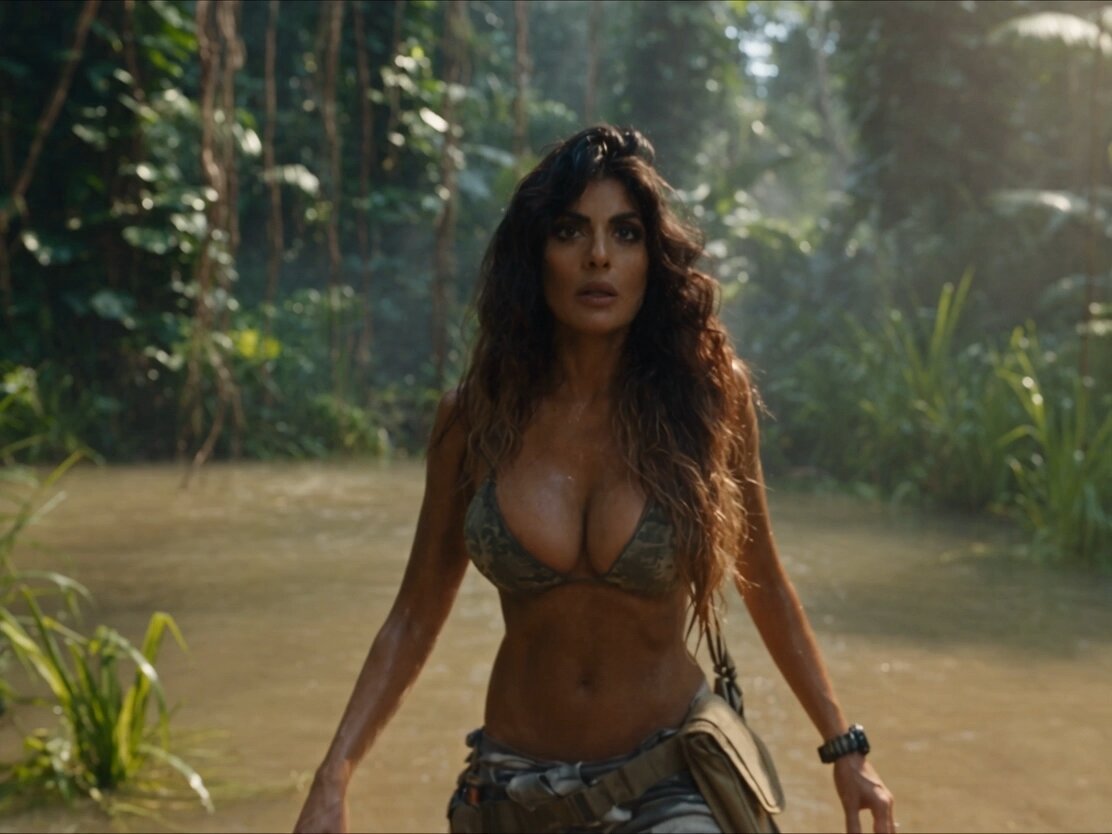
One-liner: Dissecting an ultra-long “fake behind-the-scenes” prompt to see how it uses deliberately written-in image flaws to fake realism, and a single line of in-scene dialogue as the narrative pivot — useful for anyone making twist-style short videos who keeps getting stuck on “too clean, so it looks fake.”
Field Table
| Field | Value |
|---|---|
| model | Seedance 2.5 (as noted by the author in the original post; this library has not verified backend records) |
| duration | 13.0 seconds |
| aspect | 4:3 |
| seed and reproducibility | Not recorded; unverified — the author has published the final video, but this library has not re-run it |
| final video link | Embedded preview on the page; see card above and original post |
| estimated cost | To be determined (based on official unit pricing, using the cost calculator) |
| author and original link | @rahulnanda86 · https://x.com/rahulnanda86/status/2090739038005412050 |
prompt_en
Reprinted verbatim (attribution and original link included; see field table):
Create an ultra-realistic behind-the-scenes movie-set video captured as a single continuous shot in a dense Amazon rainforest-style location. The whole thing should feel like a real practical-effects film shoot happening in shallow jungle water: humid tropical atmosphere, muddy water, dense green foliage, hanging vines, insects, misty sunlight filtering through trees, and a raw on-set vibe. The footage should look like someone on the crew is filming it casually on a handheld camera or phone: slight shake, imperfect framing, autofocus hunting, small exposure shifts, operator reactions, and real behind-the-scenes energy. It must feel like a real film set, not a polished VFX sequence.
The shot begins already in motion, with a female actress walking backward in a bikini top and shorts nervously through shallow jungle water, performing for the scene. She should look like she is in costume for an adventure film — practical, believable, wet, and camera-ready. The camera is tracking her from a slight front angle as she backs away, looking terrified, reacting to something behind her. The crew filming this is close enough that it feels immediate and dangerous, but still clearly like BTS footage.
Suddenly, from the water behind her, a massive Crocodile animatronic erupts upward in one explosive movement. It should be enormous — at least four times her size — with thick muscular body, realistic wet scales, huge jaws, long curved fangs, heavy head mass, and a practical mechanical presence. It should not look like CGI. It should look like a huge physical effects creature built for a film: realistic from the outside, intimidating, heavy, and convincing.
The Giant Crocodile lunges and bites down around her torso area in a controlled movie-stunt way, then with one violent upward motion it throws her slightly into the air. In the same fluid motion, it catches and swallows her whole, headfirst or upper-body first, like a big practical monster gag. This needs to feel shocking and dramatic, but still clearly part of a movie stunt. The snake’s jaws stretch wide, the body shifts with force, the actress disappears fully into the creature, and the operator filming reacts in real time.
Right after the swallow, from off camera, someone loudly yells:
“Cut! Cut! Cut!”
The atmosphere changes instantly from scary to behind-the-scenes.
Now the Crocodile pauses, and we realize it is part of a special-effects setup. A hatch or panel underneath the Crocodile body opens up. This should feel like a hidden practical-effects access door in the creature’s underside. From inside, we can see a smooth internal shaft/tunnel that carried the actress down through the creature’s throat and out through the belly compartment. The opening reveals electronics, cables, servos, metal supports, padding, and animatronic mechanisms inside the snake. Make this reveal satisfying and believable, like an expensive practical creature rig being shown from the inside.
prompt_zh
Translated by this library; a variant, not generation-tested, marked unverified (the translation preserves the original text’s “crocodile/snake” inconsistency without correction):
Create an ultra-realistic behind-the-scenes film-set video shot in a single continuous take, set in a dense Amazon rainforest-style location. The overall feel should be like a real practical-effects film shoot happening in shallow jungle water: humid tropical air, muddy water, dense green foliage, hanging vines, insects, misty sunlight filtering through the trees, and a raw on-set atmosphere. The footage should look like someone on the crew casually filmed it with a handheld camera or phone: slight shake, loose framing, autofocus hunting, small exposure shifts, the operator's reactions, and genuine behind-the-scenes energy. It must feel like a real film set, not a polished VFX shot.

The shot begins with the action already in progress — a female actress in a bikini top and shorts walks backward nervously through the shallow jungle water, performing for the scene. She should look like she's in costume for an adventure film — practical, believable, soaked, and camera-ready. The camera tracks her from a slightly frontal angle as she backs away, looking terrified, reacting to something behind her. The crew filming is close enough to feel immediate and dangerous, but it still clearly reads as BTS footage.

Suddenly, from the water behind her, a massive crocodile animatronic erupts upward in one explosive movement. It must be enormous — at least four times her size — with a thick muscular body, realistic wet scales, a huge jaw, long curved fangs, heavy head mass, and a tangible mechanical presence. It must not look like CGI. It should look like a giant practical creature built for a film: realistic on the outside, intimidating, heavy, and convincing.

The giant crocodile lunges and bites down around her torso in a controlled movie-stunt way, then with one violent upward motion flings her slightly into the air. In the same fluid movement, it catches her and swallows her whole, headfirst or upper-body first, like a big practical monster gag. This needs to feel shocking and dramatic, yet still clearly part of a film stunt. The snake's jaws stretch wide, the body shifts under the force, the actress disappears completely inside the creature, and the operator filming reacts in real time.

Immediately after the swallow, someone off camera shouts:

"Cut! Cut! Cut!"

The atmosphere shifts in an instant from terrifying to behind-the-scenes.

Now the crocodile pauses, and we realize it's part of a special-effects rig. A hatch or panel on the underside of the crocodile's body opens. This should feel like a hidden practical-effects access door in the creature's belly. From inside, we can see a smooth internal shaft/tunnel that carried the actress down through the creature's throat and out through the belly compartment. The opening reveals electronics, cables, servos, metal supports, padding, and animatronic mechanisms inside the snake. Make this reveal satisfying and believable, like an expensive practical creature rig being shown from the inside.
Breakdown
The 5 Things It Gets Right
1. It specifies “who is filming” first, not a style first. The key sentence in the first paragraph is “The footage should look like someone on the crew is filming it casually on a handheld camera or phone.” It doesn’t write abstract labels like “documentary style” or “vlog feel.” Instead, it establishes a fictional shooter identity first — someone on the crew, handheld camera or phone, casually filming. Once the identity is set, all the visual characteristics that follow are natural consequences derived from that identity, not a stack of parallel adjectives. This kind of writing is more concrete than style keywords and makes it easier to stay self-consistent when writing the second paragraph.
2. It fakes realism with a checklist of flaws. “slight shake, imperfect framing, autofocus hunting, small exposure shifts, operator reactions” — five defects listed one by one. Among them, autofocus hunting is the most skillful: it’s a signature behavior of consumer-grade devices, almost never appearing in any finished film, making it an extremely strong “non-professional footage” signal. The logic of the whole passage is counterintuitive — the “worse” the image looks, the more real it feels. Most people’s instinct when writing prompts is to pile on “HD,” “cinematic,” “8K.” This one does the opposite, and the effect it’s after can only be reached through subtraction.
3. It repeatedly rules out CGI and anchors the material to something touchable and physical. “It should not look like CGI,” “a practical mechanical presence,” “realistic from the outside, intimidating, heavy, and convincing,” plus the thick muscular body, wet scales, heavy head mass. Notice what these words share: they’re all about weight and tactility, not appearance. This passage effectively functions as a negative list, just woven into the prose rather than set apart as its own section (see Improvement #3).
4. It turns a single line of in-scene dialogue into a narrative pivot. The author sets “Cut! Cut! Cut!” on its own line in quotation marks, immediately followed by “The atmosphere changes instantly from scary to behind-the-scenes.” A single sound event is used as a cut point: before the call is the scene; after the call is behind-the-scenes. This is the most worth-stealing trick in the entire prompt — when you need a sharp emotional turn, instead of describing the shift itself, give a concrete event that triggers it and explicitly state the two atmospheres before and after.
5. The reveal section is written in more detail than the action section, because the climax is the reveal. The final paragraph lists the hatch, belly access door, internal tunnel, electronics, cables, servos, metal supports, padding — with noticeably higher detail density than the chase and swallow that precede it. The author knows why viewers click on this video: not to watch a crocodile eat someone, but to watch the crocodile get taken apart. The prompt’s word allocation follows “what the audience wants to see,” not “how the story unfolds.”
Where It Could Improve
1. The “single continuous shot” claim contradicts the content. The opening says “captured as a single continuous shot,” but what follows requires: a frontal tracking shot of someone backing away, an explosive eruption from underwater, a bite and toss, a swallow, a pause, and an internal close-up of the belly hatch opening. That’s already the information load of a multi-shot sequence — especially the final internal mechanics reveal, which almost certainly demands a closer camera position. When writing your own version, pick one: either delete the single-shot claim and explicitly segment by timeline while allowing cuts, or keep the single shot but change the reveal to the camera operator walking closer, crouching down, and pushing the lens into the hatch — turning the camera movement into the operator’s physical action.
2. The creature’s name gets mixed up, and at two critical points. Paragraph four has “The snake’s jaws stretch wide,” and the final paragraph has “animatronic mechanisms inside the snake” — the crocodile turns into a snake midway through. This is almost certainly residue from adapting a snake-themed prompt. The risk of this kind of leftover is that it lands exactly where form description matters most (the jaws, the internal structure), and the model may waver on the creature’s morphology. When reusing long prompts, reading through once and replacing every subject noun cleanly is a mandatory step.
3. There are no format or pacing declarations. The full text never specifies aspect ratio, duration, or frame rate, yet the actual final video is 4:3 / 13 seconds. Four action beats (backing away, eruption, swallow, reveal) are crammed into thirteen seconds — roughly three-plus seconds each — and the author never states in the prompt which beat should be long and which should be short. The result is that pacing is left entirely to the model’s discretion. How to improve: add a format declaration at the top, and annotate approximate proportions before each action beat — for example, explicitly reserving the final third for the reveal. This doesn’t guarantee the model complies (unverified), but at least the intent is written in.
Further Reading
- “Storyboard-Level Long Prompts: Organizing by Timeline Segments”
- “How to Write Upfront Declarations for Aspect Ratio / Frame Rate / Duration”
- “How to Write Negative Lists (AVOID Sections)”