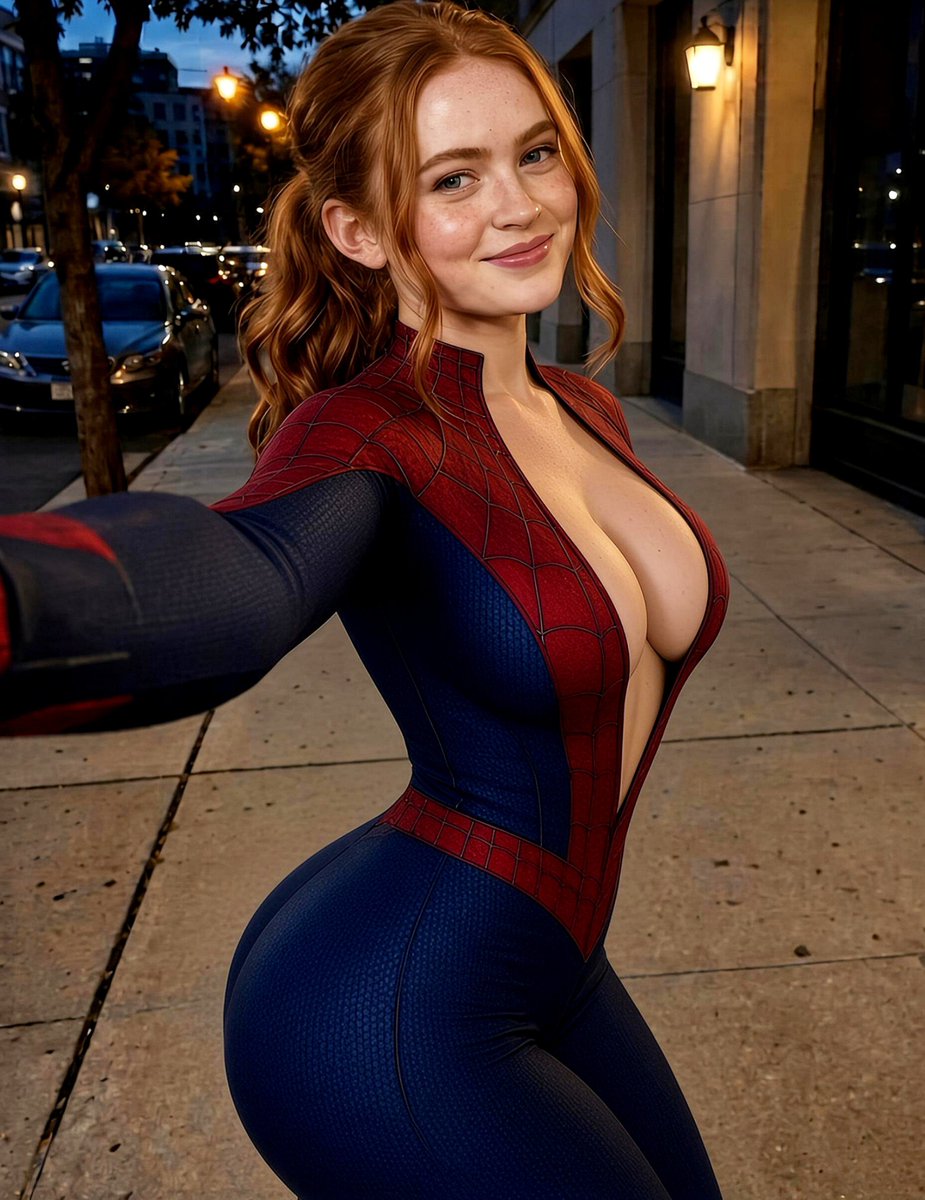
One-liner: Breaking down a city selfie portrait prompt whose only demand is “realism,” seeing how it uses positive descriptions to fend off plastic skin and mangled hands, while missing focal length and a negative list; suited for those just starting to write portrait prompts and stuck with “AI-slop at first glance.”
Field Table
| Field | Value |
|---|---|
| model | general (general-purpose image model; basis: original library curated for Nano Banana Pro, but the full prompt contains no model-specific syntax and is transferable) |
| duration | Not applicable (still image) |
| aspect | 1:1 |
| seed and reproducibility | Not recorded; unverified — the author has published the final image, but this library has not re-run it |
| final image link | Embedded preview on page, see card above and original post |
| estimated cost | To be estimated (per official pricing, using the cost calculator) |
| author and original link | YouMind-OpenLab · https://github.com/YouMind-OpenLab/awesome-nano-banana-pro-prompts |
prompt_zh
Reprinted verbatim (attribution + original link included, see field table). License: from the YouMind-OpenLab open prompt library, repository README marked CC BY 4.0 (GitHub API returns NOASSERTION); attribution requirements preserved per author’s request, actual license governed by the repository LICENSE.
Create a photorealistic urban portrait of a young woman taking a casual selfie on a city sidewalk in the early evening. She has {argument name=“hair” default=“deep brown long hair”}, tied in a loose ponytail, with soft natural strands framing her face. Her skin tone is warm and natural, with realistic skin texture, fine facial detail, and soft highlights from nearby streetlights. Her eyes are lively, eyebrows neatly groomed, with a confident yet gentle smile and a relaxed, friendly expression. Her head tilts slightly toward the camera, creating an authentic candid selfie composition.
The subject stands on a city street, one arm naturally extended toward the camera as if taking a selfie. Her posture is relaxed and confident, stance natural, and body proportions realistic. Maintain accurate anatomy, natural hand shapes, and an everyday documentary photography feel.
Note: {argument name="hair" default="deep brown long hair"} is the template slot syntax from the original library; before feeding it directly to a model, the entire curly-brace block must be replaced with an actual hair description, otherwise the model may interpret the markup itself as image content. This point is unverified.
Breakdown
The 4 Things It Gets Right
One: It bets on “realism,” not “perfection.” Four times across the text, the same demand is repeated from different angles: “realistic skin texture,” “body proportions realistic,” “maintain accurate anatomy, natural hand shapes,” “everyday documentary photography feel.” This is not verbosity — it pins down the two most common failure modes of image models — skin smoothed into plastic, and finger counts or joint directions going wrong — each nailed once. Notably, it uses positive descriptions to do what a negative list would normally do: instead of writing “avoid deformed hands,” it writes “natural hand shapes.” There is no settled verdict on which approach is more reliable; this point is unverified; but the advantage of positive phrasing is that it also provides the target state, not just a forbidden zone.
Two: It conveys camera position through action, not by shouting “selfie angle.” The key sentence is “one arm naturally extended toward the camera as if taking a selfie,” paired with “head tilts slightly toward the camera.” If you simply wrote “selfie angle,” that is an abstract label the model could fulfill in any way; written as an action, one sentence simultaneously locks down arm position, body orientation, and subject-to-camera distance, making the parts of the frame more likely to cohere. This is the most worth-stealing technique in this prompt.
Three: The light source is specific down to “nearby streetlights.” The original text does not stop at the time label “early evening” — it gives a directional point light and lands on a visible result — “soft highlights.” A time label only sets color temperature; light source position determines shadow direction and facial dimensionality, and the difference between the two for portraits is large. See “Writing Light and Atmosphere Descriptions.”
Four: The candid feel is built from small actions. “Loose ponytail,” “soft natural strands framing her face,” “head tilts slightly,” “posture is relaxed” — four details all doing the same job: pushing a posed shot toward a candid one. Flyaway hair and a tilted head are the two highest-value words in this style of writing, because they are concrete without altering subject recognition.
Where It Could Improve
One: No focal length or framing declaration, so reproducibility will be poor. The same selfie — a phone front wide-angle (roughly 24mm equivalent) shows pronounced near-far size distortion, nose enlargement, and edge stretching, while a 50mm prime gives flatter perspective and a face shape closer to reality. The original leaves this choice entirely to the model, meaning the same prompt run twice could produce two different face proportions. When writing your own version, add a lens and framing declaration at the top; see “The Visual Language of Focal Length” and “Declaring Aspect Ratio / Frame Rate / Duration Up Front.”
Two: Missing an AVOID section. The whole prompt relies on positive phrasing to dodge plastic skin and bad hands, but another class of problems gets no safety net: background pedestrians’ faces, extra fingers, streetlights blown out into white blobs, or stray signage text and watermarks appearing in frame. These can be listed in one line at low cost. See “Writing the Negative List (AVOID Section).”
Three: Templating is only half done, and the background is empty. There is only one slot, hair; clothing, street type, season, and composition are all hard-coded — for something calling itself a “parameterized template,” the slot density is clearly lower than comparable entries. More critically, the background: “city sidewalk” and “city street” appear twice, yet no concrete elements are given (shop sign lightboxes, wet-ground reflections after rain, blurred traffic), effectively handing the lower half of the frame to the model’s improvisation. Either add slots and background elements, or simply admit it is a single-scene prompt.
Further Reading
- “The Visual Language of Focal Length”
- “Writing the Negative List (AVOID Section)”
- “Writing Light and Atmosphere Descriptions”