复古动漫MV歌词同步
音乐视频 动漫 2026-08-30
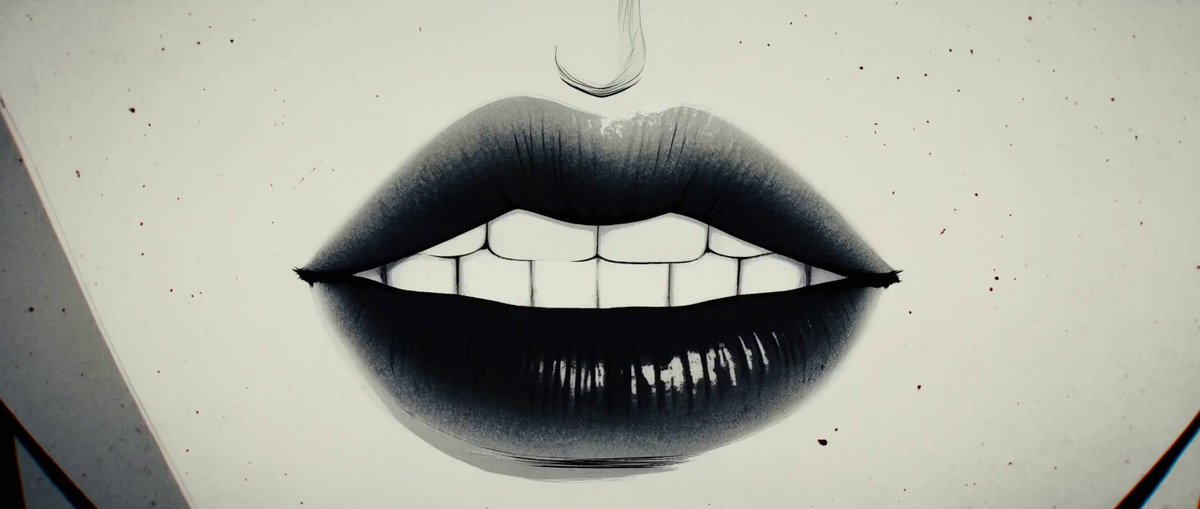
成片 © @aleenaamiir · 查看原帖
成片经原作者公开发布,本站直链展示;权利人可要求下架
提示词原文
Testing Hailuo Minimax H3 with retro anime-inspired MV styles, exploring how it handles singing character, lip-sync and beat-synced editing.

Prompt shared below ↓ https://t.co/bTClgAcPQY

### 作者补充

[补充1]
1/3

Create a 15-second retro anime K-pop hip-hop MV featuring a charismatic anime lead character actively singing directly to camera, with every major lyric visually synchronized to kinetic2/2 typography.

The singer performs with accurate lip-sync, expressive eyes, natural jaw and mouth movement, visible breathing, confident body rhythm, microphone interaction, and strong emotional connection to the lyrics.

ART DIRECTION:

Underground retro street-poster aesthetic combining:
black-and-white manga,
photocopied punk zines,
torn street posters,
VHS distortion,
halftone dots,
xerox grain,
graffiti marks,
ink smears,
rough paper edges,
magazine cutouts,
and aggressive kinetic typography.

Color palette:
deep black,
dirty off-white,
charcoal grey,
and saturated crimson red.

Typography is one of the main visual characters of the MV.

LYRIC-SYNCHRONIZED TYPOGRAPHY:

Every important lyric word or short phrase appears exactly when the singer pronounces it.
Typography must follow the vocal timing precisely rather than appearing randomly.
Each lyric should enter on the corresponding syllable, remain readable for the duration of the vocal phrase, and disappear or transform according to the rhythm.

Example vocal timing:

Singer: “DON’T”
→ giant DON’T slams into frame exactly on the word.
Singer: “STOP”
→ STOP crashes vertically behind the singer on the next beat.
Singer: “MOVE”
→ MOVE stretches horizontally while the character steps toward camera.
Singer: “FASTER”
→ FASTER repeats rapidly across the screen following each vocal syllable.
Singer: “BREAK THE RULES”
→ BREAK appears fractured,
THE appears tiny between frames,
RULES expands until the letters extend beyond the screen.

The typography should react differently depending on vocal delivery.

Whispered lyric:
small minimal typography close to the singer’s mouth.

Aggressive rap lyric:
huge compressed uppercase lettering violently punches into frame.

Sustained vocal:
letters gradually stretch, expand, smear, or trail across the screen.

Fast rap:
words rapidly stack, duplicate, flicker, and replace one another.

Repeated lyric:
repeat the same word visually across multiple layers.

Important final lyric:
one enormous clean word dominates the composition.
Do not display the complete lyric sentence permanently like subtitles.
Instead, isolate visually important words and phrases and choreograph them to the performance.

TYPOGRAPHY STYLE:
Use bold English typography inspired by:
90s music magazines,
punk posters,
Japanese street graphics,
hip-hop flyers,
photocopied zines,
brutalist editorial design,
and vintage concert posters.

Mix:
ultra-condensed sans serif,
oversized heavy grotesk,
italic speed typography,
photocopied type,
distressed stencil letters,
handwritten marker lettering,
tiny editorial metadata,
and occasional manga-style sound typography.

Typography can:
move behind the performer,
pass in front of the performer,
wrap around their silhouette,
become part of the physical environment,
appear painted onto walls,
explode from the microphone,
follow head movement,
track the character's hands,
or become dimensional objects inside the scene.

Maintain strong readability despite the experimental treatment.

[补充2]
2/3

0–3 SECONDS — VOCAL HOOK:

Extreme close-up of the singer’s lips.
The first lyric begins.
Each word emerges directly around the mouth as it is pronounced.
Hard cut to an intense eye close-up.
A large keyword from the lyric appears reflected inside the eye for a few frames.
Singer looks directly into camera.
The typography abruptly disappears on the first bass hit.

3–6 SECONDS — PERFORMANCE REVEAL:

Crash zoom outward into a low-angle medium shot.
Character continues singing into a handheld microphone while walking toward camera.
Each lyric word hits a different area of the composition.
A word appears behind the singer.
Next word passes across the foreground.
Next word becomes a giant poster pasted onto the wall.
Next word follows the character’s hand gesture.
Typography and body movement should feel choreographed together.

6–10 SECONDS — RAP / BEAT DROP:

Fast K-pop hip-hop performance.
Character sings and raps while performing compact choreography.
Maintain continuous lip-sync.
Switch rapidly between:
fisheye face close-up,
low-angle microphone shot,
full-body dance performance,
side profile vocal shot,
extreme mouth close-up,
overhead shot,
and handheld tracking shot.
For fast lyrics, animate individual words rhythmically:

WORD → CUT → WORD → CUT → WORD.
Typography punches into frame on consonants and bass hits.
Syllables can briefly appear independently.
Example:
“RUN-NING FAST”
RUN
appears huge.
NING
duplicates behind the character.
FAST
stretches across the entire frame during a whip pan.

10–13 SECONDS — TYPOGRAPHIC CHAOS:

Increase editing intensity.
Singer continues the vocal performance while typography fills the visual environment.
Rapid lyric fragments appear as:
torn posters,
red stamps,
manga panels,
handwritten notes,
vertical text,
huge cropped letters,
photocopied duplicates,
and animated wall graphics.
Important words should remain readable for at least a few frames before transforming.
Use freeze frames where the character is isolated from the background while a major lyric word explodes behind them.

Every visual change should be motivated either by:
the lyric,
the vocal rhythm,
the drum pattern,
or the performer’s movement.
Avoid random graphics.

13–15 SECONDS — FINAL LYRIC HERO SHOT:

Camera suddenly becomes more controlled.
Character walks close to camera while singing the final line.
Keep intense eye contact.
For the final word, character lowers the microphone slightly.
The final lyric appears as enormous typography behind the singer.
Freeze the performer on the exact final vocal hit.
Convert the frame into a distressed black-and-white photocopied concert poster.
Final lyric remains bright crimson red.
Add subtle VHS tracking distortion.
Hard cut to black.

CAMERA LANGUAGE:

Aggressive handheld performance cinematography,
fisheye lenses,
24mm wide-angle close-ups,
extreme facial close-ups,
Dutch angles,
low-angle hero framing,
rapid dolly pushes,
snap zooms,
whip pans,
overhead compositions,
and short controlled slow-motion moments.

EDITING LANGUAGE:

Every cut should feel musically motivated.
Use:
smash cuts,
jump cuts,
2-frame inserts,
freeze frames,
repeated frames,
speed ramps,
flash cuts,
poster-rip transitions,
manga-panel transitions,
split-screen edits,
frame skipping,
VHS tracking glitches,
graphic match cuts,
and rhythmic hard cuts.
Prioritize lyric timing over excessive transitions.

PERFORMANCE DIRECTION:

The character should feel like a real K-pop performer rather than a posed anime model.
Maintain:
accurate vocal lip-sync,
phoneme-aware mouth movement,
natural blinking,
subtle facial muscle movement,
breathing between phrases,
head movement following rhythm,
confident microphone handling,
expressive hand gestures,
shoulder movement,
controlled dance choreography,
and direct interaction with the lens.
Character identity, face, hairstyle, outfit, microphone, and proportions must remain visually consistent through every shot.

[补充3]
3/3

OVERALL FEELING:

A professionally directed underground K-pop hip-hop MV combining anime performance, punk zine culture, street posters, kinetic lyric typography, manga composition, VHS nostalgia, and contemporary fashion-film editing.
Typography, vocals, choreography, camera movement, and beat should feel like one synchronized visual system.

Avoid:
subtitle-style lyric captions,
random words unrelated to the song,
typography appearing before the lyric is sung,
incorrect spelling,
unreadable text,
weak lip-sync,
random mouth movement,
static facial expressions,
floating text with no compositional purpose,
inconsistent character identity,
unmotivated transitions,
or excessive visual clutter.
元信息
| 目标模型 | MiniMax H3 |
|---|---|
| 用途类目 | 音乐视频 |
| 风格 | 动漫 |
| 媒介 | 视频 |
| 时长 | 15.1 秒 |
| 画幅 | 92:39 |
| 点赞 | 10 |
| 发布时间 | 2026-08-30 |
署名
作者:@aleenaamiir · 查看原帖
提示词版权归原作者所有,本站按署名 + 链接原文的方式索引与引用;权利人可要求下架。